
“Toy Story 5” Creatives On Thirty Year Beloved Franchise, Nostalgia & Fresh Voices!

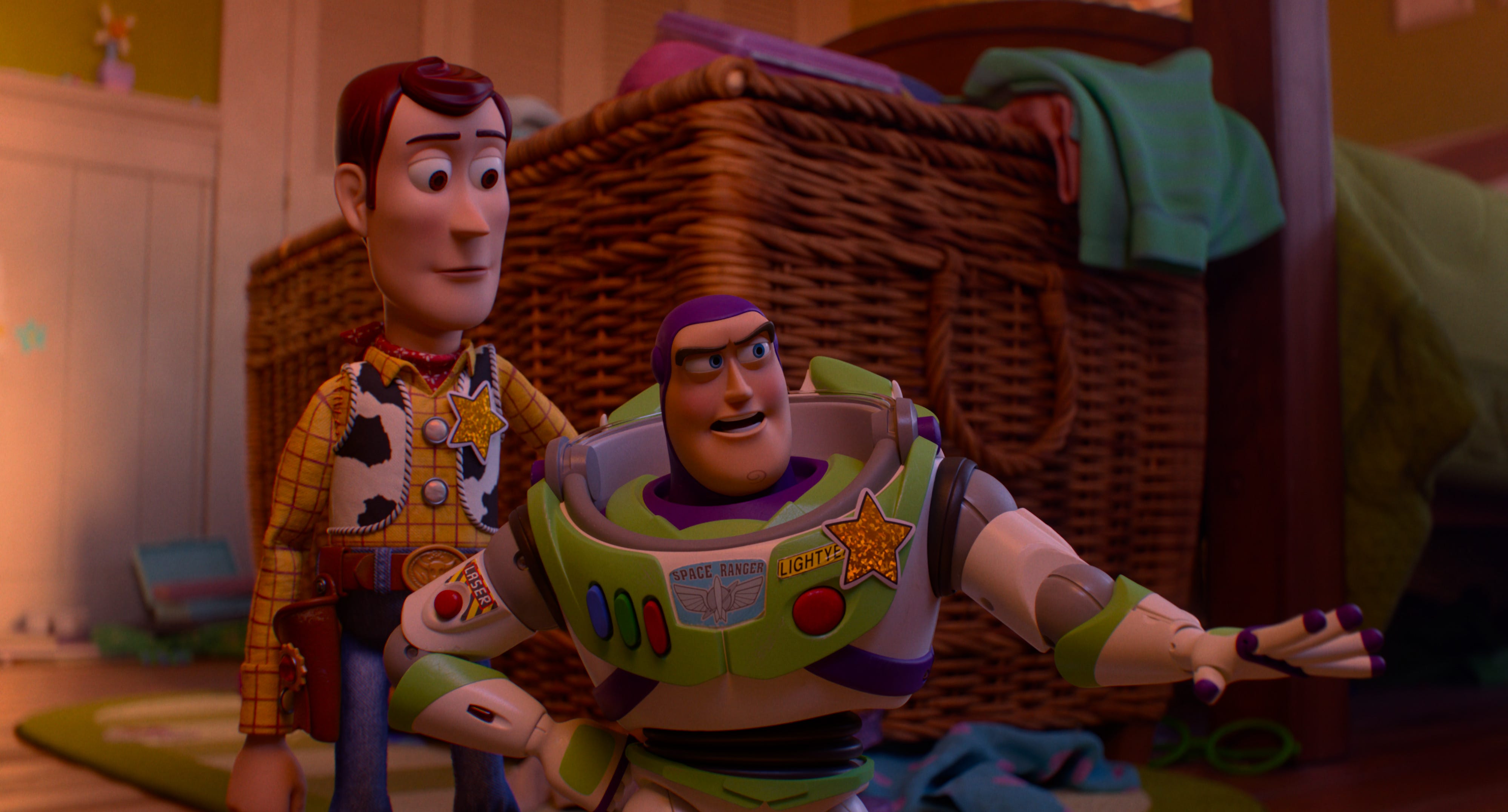
Nerdigo correspondent Kay-B got an exclusive conversation with the creatives behind the latest installment of the beloved animated Disney & Pixar franchise, Toy Story 5! Written and co-directed by Kenna Harris (Elemental), Toy Story 5 sees Woody (Tom Hanks, The Phoenician Scheme), Buzz Lightyear (Tim Allen, Shifting Gears), Jessie (Joan Cusack, Klaus), and the rest of the toy gang up against their biggest threat yet: technology! For the Critics Choice Association Press Conference, Harris was joined by Lindsey Collins (Producer) and Pete Docter (Executive Producer and Chief Creative Officer) to discuss why right now is the perfect time for this latest installment, complicated relationships with technology, casting new voices, and so much more!
On what convinced them to create this story now, for these characters to return seven years after Toy Story 4, Harris shared: “A couple years back, Pixar was kind of floating around the idea of like, hey, is now the right time for another Toy Story? And is Andrew Stanton the right director for it? He’s been a part of the series since the first film, has always written for these movies, knows the characters like the back of his hand. So, of course, you know, he should direct. And he was only interested if, you know, he could really take it where he wanted to see it go. And his first draft included these three core ideas of devices being introduced. He already had Lilypad kind of envisioned as an antagonist. He wanted Jessie to be running the room now that she had had the sheriff badge passed to her. And then he really wanted to see fifty Buzzes going rogue in the film and washing ashore in the beginning on a beach, which all of us were like, tell us again about that. What do you mean by that? And he was like, just go with it. Just go with it. But the first draft, just those concepts alone, felt so exciting and strong, especially for a lot of us. We were like, oh my gosh, Jessie being the protagonist feels like a no-brainer. And the rest is history.”
Docter chimed in: “And then we added Kenna.”
Collins added: “Yes, we had the initial ingredients that we wanted to cook with, and then Kenna was the other very important ingredient we added.”
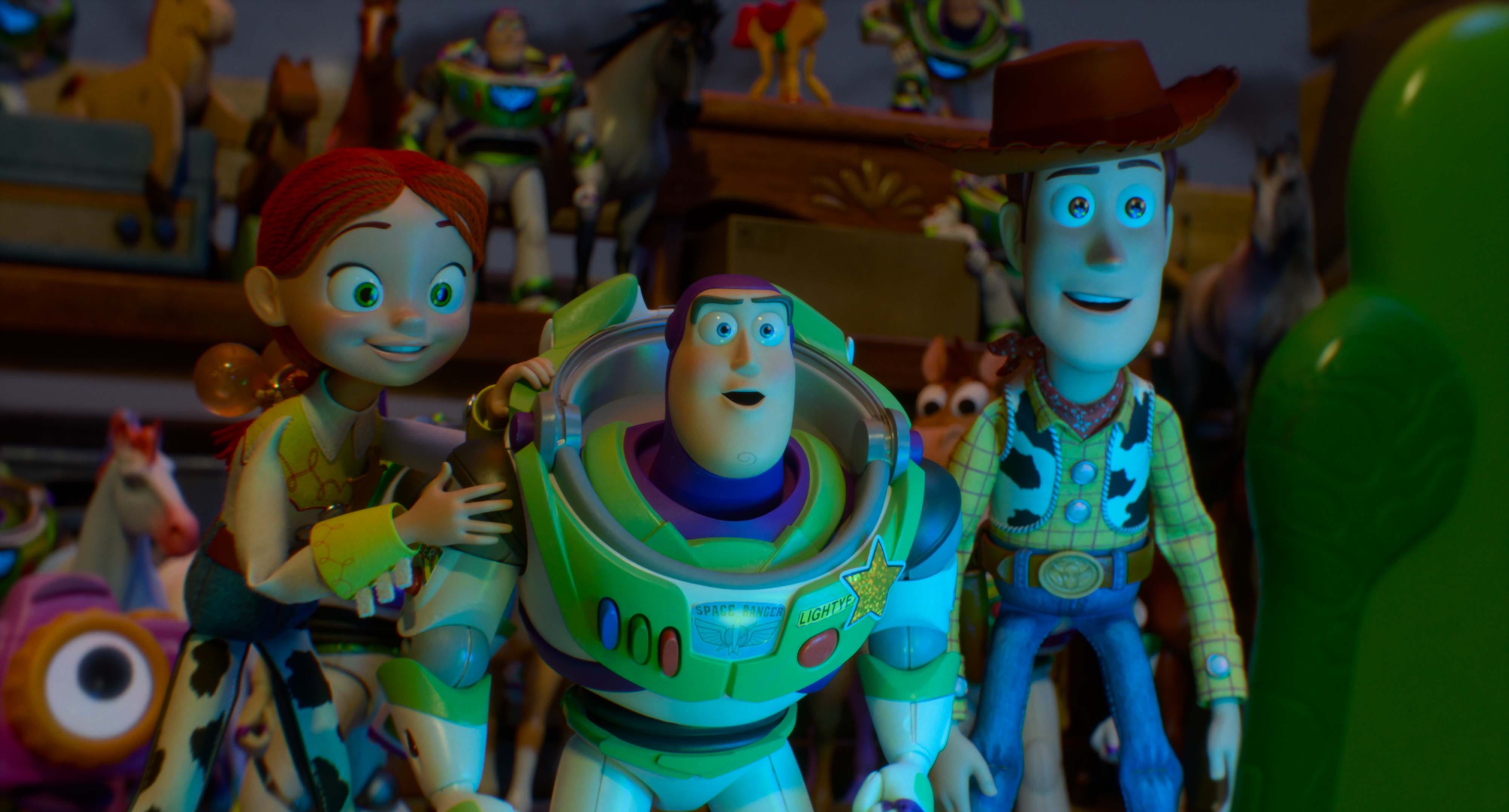
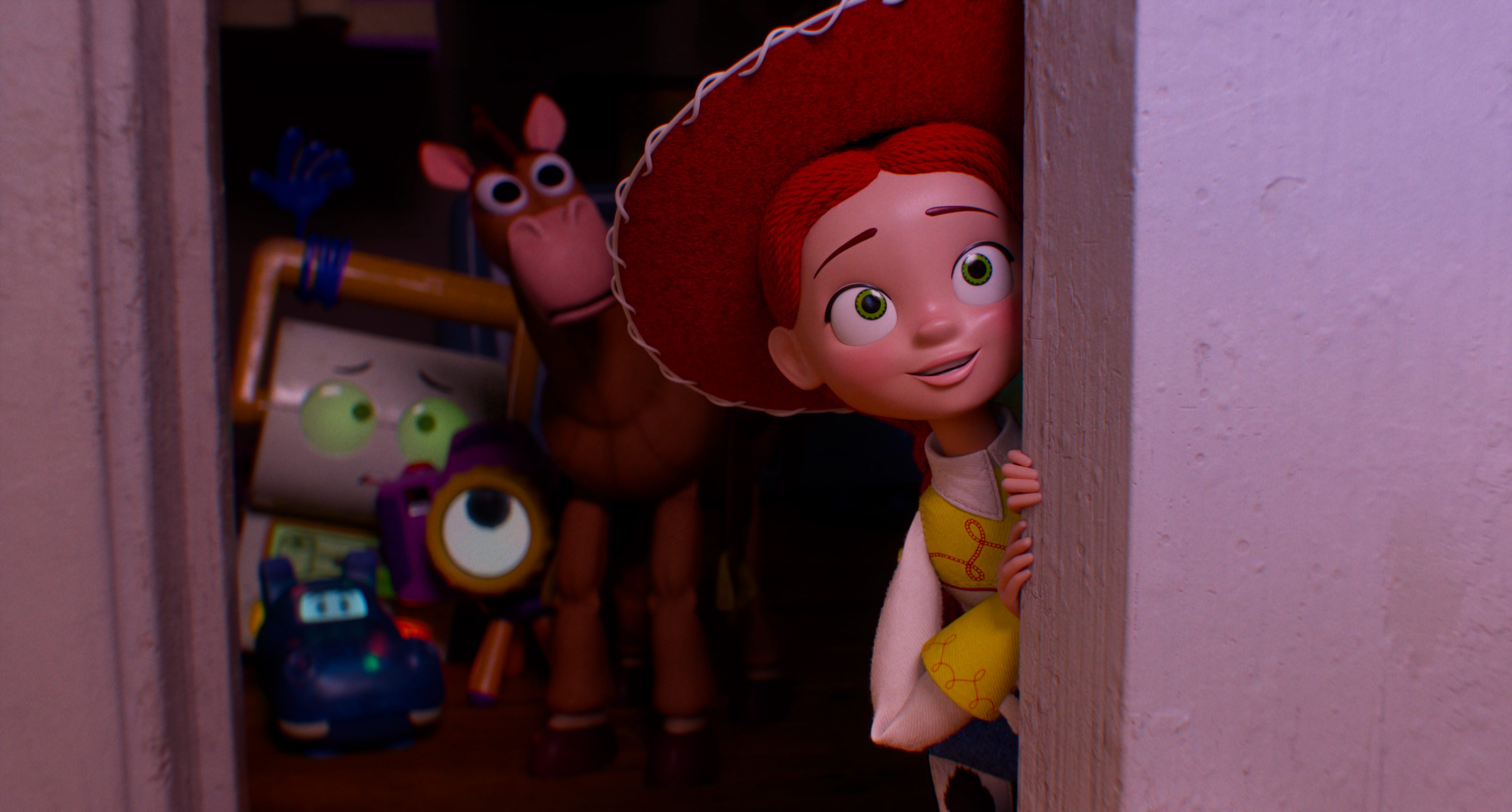
Harris continued: “My first movie in theaters was Toy Story 2. And so I’ve always loved Jessie, and I’ve always been a drawer. So I would draw her constantly. I would draw her in the window, just like during the Sarah McLachlan scene. And so when Andrew first kind of asked if I wanted to join as co-director, there was like the briefest moment of like, ooh, that’s intimidating. He’s only like the guy of my childhood who wrote all these stories. And then I went, wait, is he asking me to write Jessie fan fiction with him? Then I’m the perfect choice. And so I immediately kind of fell into it with a lot of joy.”
On how they decided to incorporate technology as a bit of a villain when it is such a big part of everyone’s day-to-day lives, Docter told us: “We did have elements of it even in Toy Story 4 that worked their way out, for some reason I don’t remember exactly. They weren’t central to the thread.”
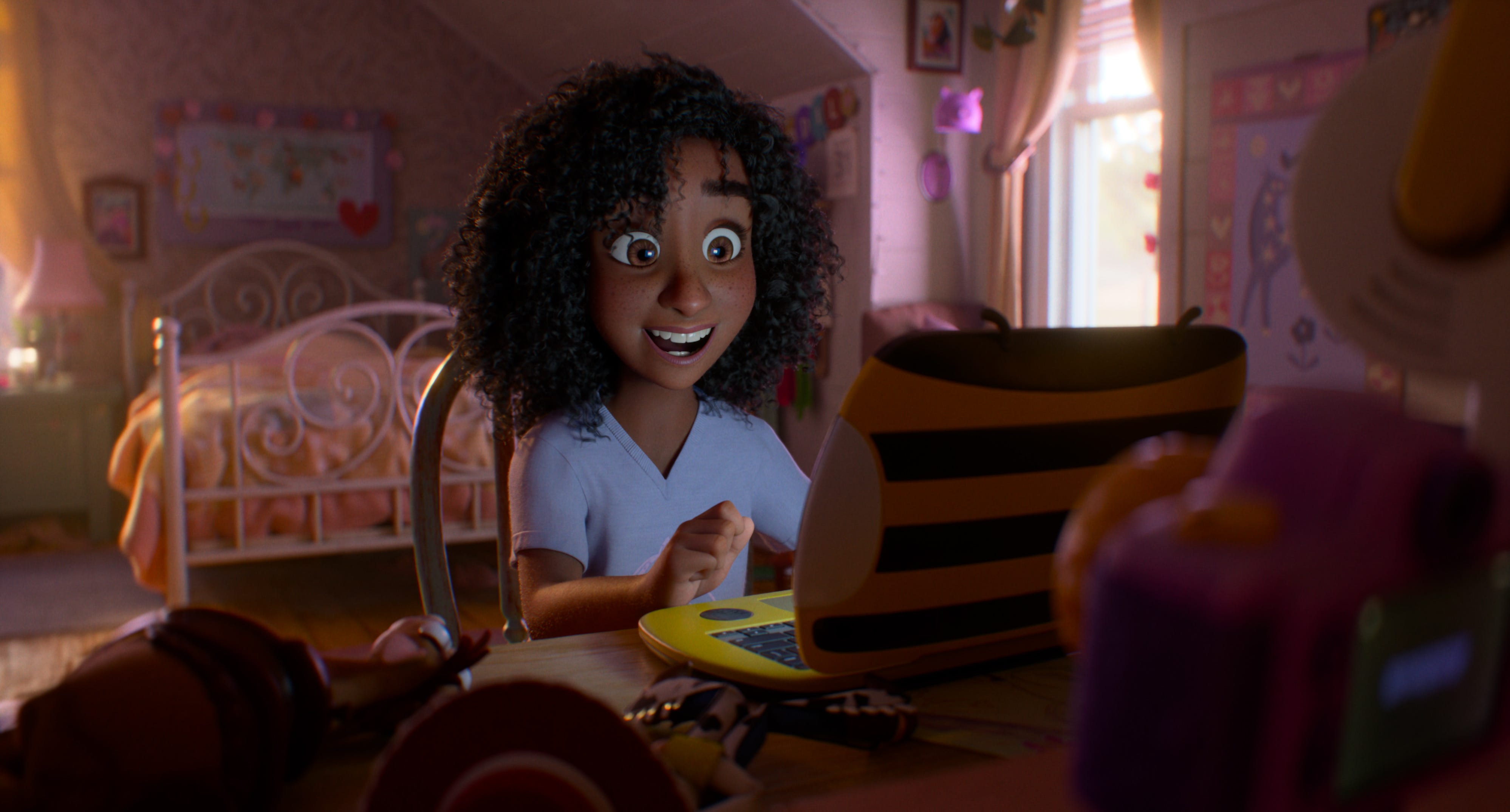
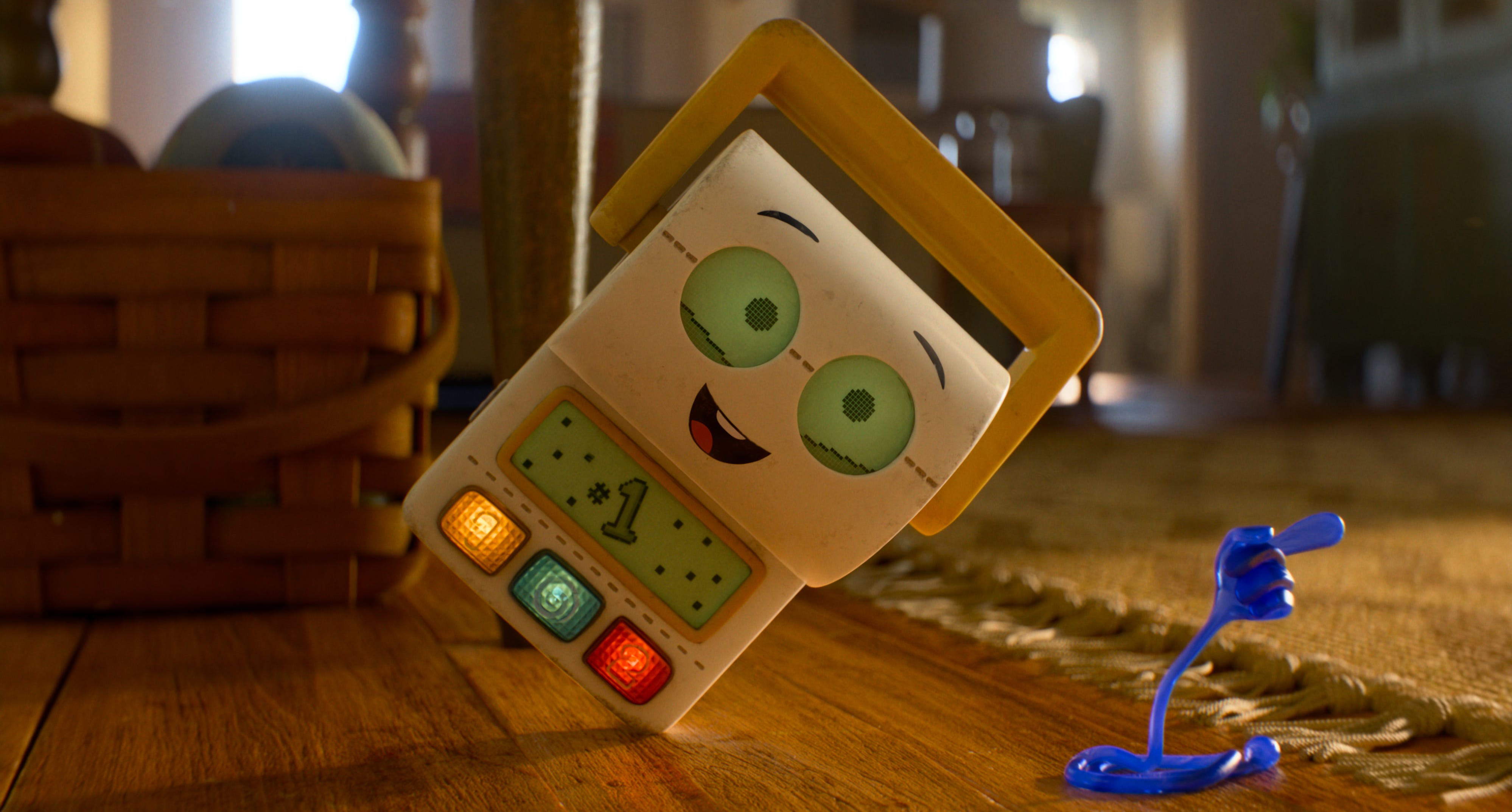
Collins stated: “And I feel like it was such a big topic that if you’re going to kind of broach it, it felt like the whole movie needed to kind of revolve around that. But I will say, I think we just started with reflecting what we were seeing. And rather than try to come in with kind of a take on it, it was just like, okay, let’s start with just kind of representing what we are all feeling is our complicated relationships with technology, what we’re seeing in terms of our kids’ relationships with technology, and start there so that we can kind of start from a place of truth rather than a place of judgment around it. Oh, there’s tons of judgment. And then also, I feel like we then kind of really delved into the character aspect, which is like, okay, if we’re going to talk about technology and that’s going to be the antagonist, obviously, what’s the character going to be, and who is Lilypad? And if she’s a tech device, kind of what’s her philosophy, and why is she in the room to begin with?”
Collins affirmed: “Obviously, she’s coming in with the same kind of initial intent of all the toys, which is, I’m here to help. I have a purpose. I care about this kid, and I’m going to help. I have an opinion about how to do it, and it’s completely flawed. It’s all about kind of all the data and all the numbers. And I can tell you exactly how to kind of do a checklist to get your kid, you know, to be the President of the United States by the age of, you know, thirty. And it’s all kind of — none of it’s based on any kind of experience. And that’s felt very true. That’s, of course, how a tech device would come in, or a tech toy would come in. And that is completely in contrast to Jessie. And that, all of a sudden, starts to provide drama and fun.”
On the storyboarding process and balancing introducing new characters but having hits of nostalgia for one of the biggest and most beloved franchises, Docter said: “We have a process that allows us to get it wrong many, many times. And so we take our first pass. In fact, I think Andrew is pretty blatantly like, I’m not worried about the other characters. I know — I remember him saying this in one of the first or second screenings — like, these other characters have to be balanced. I’m just focused on the through line of the main character. We can get to all that. So it really — the old adage is writing is rewriting is definitely right on in our case.”
Harris added: “It just ended up — practically each day, it still just ended up being a challenge. And I feel like the ways we accomplished it really varied. Like, sometimes it was a roll of the dice of like, all right, who hasn’t spoken in five minutes? Like, let’s — it’s Dolly. Let’s give Dolly a line. And so there was kind of truly, like, at times, a mad scramble. But also just, I think, this organic realization of what characters are really, like, thriving, and suddenly you know, Smarty Pants isn’t something that we’re trying to pitch and, like, convince others that they want to see him on screen. It’s like, no, he’s stealing scenes. We want to see more from him. And so, yes, we do need to sacrifice. We do need to see less of certain characters that, yes, we love. But we have a newfound confidence in that, like, our audience is really going to enjoy these new characters that we’re making room for. But yeah, it was never easy. It’s a lot of mouths to feed when it comes to characters in a Toy Story production.”
On how the team worked with their casting directors to find new voices, and the challenges about bringing new name actors to the Pixar family, Collins articulated: “I mean, sometimes it’s really easy. I mean, sometimes you have these moments of just, the epiphany. And Kenna, I will absolutely credit for kind of coming up with Conan O’Brien for Smarty Pants. That was all Kenna being like, wait a minute, I have the perfect choice. Andrew did a great scratch recording. And so it was hard to think about somebody who could replace Andrew. But I think all of a sudden, it was like, oh, wait a minute — Kenna was like, I have it. But other times, we do — we absolutely go to our casting department and talk about kind of what we’re looking for, what the characters are. And then they spend a lot of time either coming to us with people that they know are amazing actors and that also want to be part of Toy Story. Being part of Toy Story actually is a thing that people are excited about. Bad Bunny is a perfect example of somebody that has kind of been a Toy Story fan forever, and was like, when we were trying to come up with a cameo role, he was like, well, wait a minute.”
Collins continued: “The worst you could say is no. And he was like, absolutely, I’m in. But then you have others that are kind of lesser known and that are much more kind of driven by listening to the voices as they kind of complement one another. And that’s really kind of the key to making sure that we’re kind of casting really unique voices that animators are excited to animate. So especially with the tech trio, you’re not going to want to cast them in isolation. You’re always trying to listen to those voices together to make sure that they are distinct and fun to listen to.”
On how their own childhoods infuse their creativity as filmmakers, especially on a film franchise that has always been about maintaining the spirit of childhood and wonder, Harris revealed: “I mean, constantly. I think that a lot of us at Pixar just never stopped playing. And that was what was so fun about our Toy Story crew, is that even though there was a lot of different generations, like, there were folks on Toy Story 5 who had worked on every single Toy Story and were providing so much experience and wisdom. And then there were these, like, Gen Z kids who are the ones who are, you know, craving like, hey, let’s make Woody bald, you know, like, and they’re coming with this, you know, awesome new perspective. But all of us have way more in common than not. And it is this kind of united craving for play, and for just constantly, like, using your imagination, which this movie in particular is very much celebrating. All of the Toy Story films feature play in some way, but this one is just showcasing how key that all is. And I don’t know, it’s just so natural. I feel that I’m very Jessie-like, and so I just wanted to make sure on the show everyone was having fun and that the work felt like play. So I don’t know, I feel like I’m just a kid. I mean, like, Lindsey loves being reminded that I was one year old when the first Toy Story came out, after all.”
Docter remarked: “I do want to say, though, that the other aspect that a good story artist — and Kenna has in spades — is not just play, but play for the benefit of the audience. From the beginning, our job, we know, is to entertain people. We’re not just doing this to work out our own inner demons, or, you know, have fun for ourselves. We want to make sure that everybody is engaged, involved, and looking for those things that we really think will speak widely to everybody. And Kenna is very good at that.”
On how animation technology has evolved since the first Toy Story, and what they’re able to create now, Docter expressed: “There’s a great example in the film, Toy Story 5. So, in Toy Story 1, if you remember, Woody gets his forehead burned by Sid with the magnifying glass. And as soon as Sid leaves, he goes, ah, and he dunks his head in. And in the boards, in the storyboards, it was a bowl of dog water with stuff floating in it. And he went like, blah, blah. We could not do water. So we just had a long meeting, and we talked about, like, how do we do this? What if we put the camera low on the ground? Could we do water then? No, the splashes are still hard. So what if we suggest water by putting cereal? So in the film, if you remember, he runs around. You don’t really see it, but some cereal comes up stuck to his eyes, and we got an extra laugh out of it. And that was really born out of the inability to put all the work into making a splash. Now, in Toy Story 5, Jessie runs into the house, and Mom comes home, and she plants him in a bowl of pig water. So it comes full circle. We’re able to do that sort of thing now that was near impossible back in the ‘90s.”
Collins quipped: “I do feel like the tech has gotten to a point now where it’s honestly almost impossible to present the tech artists with a problem that they can’t solve. And you would think that would mean that we would make our movies much faster with fewer people. Not true. Fun fact. I think the reason for that is actually — it’s just giving us more time to iterate on story. We gobble up any savings we have on technology innovation, you know, which there’s a lot of — how fast we can render things now and all that kind of stuff. All of that is kind of gobbled up pretty instantly on, like, does that give us one more shot at trying to get the story right?”
Docter responded: “Even within animation, similarly, the animators now have so much polish. I mean, they’re so good. If you go back and look at the animation in Toy Story 1, it’s sort of clunky and lacks weight. But the performance is the same. I think that’s the consistent thing, that we’re always focused. This is something John recognized right away. The technology is going to wow you for about three seconds, and after that, it’s got to bring it in terms of what it’s saying. It’s got to have some emotional thing and a connection that the audience recognizes as real in the performance. That’s what I think the animators at Pixar are second to nobody in: their ability to just dive into a character and make them feel alive.”
On the emotional territory that Toy Story 5 explores that the previous films either could not or did not, Harris disclosed: “Well, it’s naturally kind of exploring the interiority of a kid’s life more than the previous films did. And I think that there’s kind of a truth to the fact that Andy’s childhood was a bit simpler than Bonnie’s. I feel super nostalgic for my own childhood, because it was kind of just at the cusp of, like, iPhones. And so I did — I spent a lot of time outside. And I think there are kids now who, like, think about that in almost fantastic historical terms. Like, what was it like in “the olden days,” when you did not have a screen to engage with? And so not only is there this kind of practical issue of, you know, Bonnie being raised with maybe a little bit less play, a little bit less imagination, but a lot of the social aspects of her life are complicated by Lilypad. And it just felt like this awesome natural progression, that Jessie — you know, it is the biggest challenge she’s faced yet, but it’s just not as simple as playtime being eradicated. That’s almost a selfish, like, goal for her to try and save.
Instead, she has this greater wish of, like, how do I help my kid connect with others, when that is something that is at stake for a lot of kids these days? And yeah, we were really excited about it. Early on, when we were developing the film, it felt like our tech issue was a little bit binary, like everything was just about the attention deficit. But once we sort of unlocked, like, oh, it’s about how toys and tech connect us, and it’s the various facets of that connection that we’re exploring, things started getting really juicy.”
Collins commented: “I would also say, the other thing I think is different is Jessie on this — and I think, you know, what she’s kind of struggling with, and then ultimately hopefully gifted with at the end of this film, is this kind of realization of impact. And I think that is showing something, you know, again, as we talk about how these films age and what we’re all struggling with as filmmakers, and therefore what we’re kind of projecting onto these characters to varying degrees. I think for Jessie, that was always the quest: to kind of be like, this is a movie for her, about her, and that knowing full well that that meant that we were going to need to kind of fix her to some degree at the end, or make her feel like she’s kind of whole in a way that she hasn’t been before. And so what that meant, and what that was exactly, was something obviously that everybody went around and around on for years. But it ultimately kind of settled on the fact that this realization of impact, and the understanding that it doesn’t matter how long you’re with somebody, you can impact their lives in just a moment at times. And that gift of knowing that impact is so incredible. As a parent, I’m always questioning, like, am I making a difference with my kids? Are they ever going to remember any of this? Are they going to remember any of the positives? I’m sure they’re going to remember the negatives. And have I given my parents enough of that gift? Have I told them what an impact they’ve made on me, or my friends, or whatever? So again, I think that’s another kind of emotional through line that we really tried to lean into on this one.”
On the beautiful and heartbreaking Pixar gut punches, and who to give the credit to for the time capsule Jessie and Emily moment in this film, Harris mentioned: “The time capsule, though, wasn’t until — it was a pretty late-in-the-game discovery, and it was sort of the whole team coming together, like our story leadership, our edit leadership. And we knew that Jessie was going to the tree to be alone, and we knew that she needed to make some kind of massive discovery there. But, again, this was the head-scratcher of the production for quite some time. And so it was just kind of this organic decision of, like, well, what if there’s a time capsule there? And what if there’s something that we didn’t know about Emily before that we could find out now?”
Docter continued: “It’s revisiting the trauma and expunging those ghosts, in a way.”
Collins added: “But it was, how do we do it? And what were we trying to actually gift her — the, oh my gosh, I get to see her again? Are we trying to gift her that? And really, it was much more kind of deep than that. It was this understanding of impact, and how do we kind of visualize that and kind of deliver that.”
On the thirty-year history of the franchise, and what they hope audiences take from Toy Story 5, Docter divulged: “I think the thing that I keep coming across with all our movies, and even individually as a person, is that inevitably people think it’s up to them, and that somehow they’re going to do it by themselves. And what we learn over and over is it takes a community. It takes a village of people to all be aligned and come together to really make these things work.”
Collins added: “I mean, I talked a little bit about what I love about this film, which is this sense of kind of the acknowledgment of impact. And again, that’s not to say that is just purely, oh, I had an impact on other people, but also recognizing the importance of giving people the gift of telling them of an impact they’ve had on you. I really thought that was such a lovely way to wrap up the story for Jessie. And I feel like it took us so long, as you just heard, to land there. But I really feel like it’s a generational kind of message, that it works across so many different generations in different ways. And I just really love it.”
And Harris concluded: “And I just hope people take away that, especially lately, as technology is advancing in the way that it is, in ways that feel scary to a lot of people, I think that play is inherently human. And, like, it’s a part of us that we can’t turn off. It’s the superpower that is inside each kid, each adult. So I know that, like, I just want folks to go to Toy Story 5 and feel empowered to use their imagination, maybe especially adults who feel disconnected or feel powerless in the face of a lot of our devices. So yeah, that’s what I’m excited about.”
Catch Toy Story 5 in theaters now!
Editor’s Note: This coverage reflects a condensed summary of the press conference. Some remarks have been paraphrased or edited for clarity and flow.
 | A guest post by
|