
The Revolution Was Only In Theaters
In 2025, it was all about fighting back.

In some ways, 2025 feels like the year the world officially started to end.
Around the world, military leaders and strong men pushed their advantage against the poor, tired, and hungry, wrenching every last morsel of power for themselves. In Russia, the Kremlin continued its military occupation of Ukraine, while expanding domestic repression against its own citizens to pay for the effort. In Sudan, mass hunger and displacement became the order of the day as the civil war took over more and more territory in that country. In Myanmar, the military-controlled junta crushed resistance groups, seizing all power away from civilian political structures. In Hungary, Viktor Orbán consolidated control over courts, universities, and the media through “emergency powers,” justified by the very instability they cause. And, of course, the genocide in Gaza played out on the world stage, with prominent war criminal and one-time Joe Biden-huggin’-buddy Benjamin Netanyahu as the poster child for a new type of evil which the world must never forget.
Here at home, of course, we had our own strong men pushing fear to gain power. As with all things, it’s a little dumber here in America, but beneath the stupidity, it’s mostly the same. Sam Altman and his cohort of obsequious nincompoops continue to absolutely hemorrhage money despite insisting that they’re building a very useful future that we all definitely want, even if they have to force it down our throats. Speaking of forcing things, our most recent rapist President retook office this year after Democrats were shocked to discover that neither a sundowning octogenarian nor a pro-Israel cop no one voted for was enough to move the needle with the average American liberal. Then, of course, in the background of all of that is the enshittification which is all too recognizable: everything, everywhere, all at once, just becoming worse than it once was. Not through the lens of nostalgia or whatever. But actually, measurably, worse.
But movies? The movies were good this year.
Look, don’t get me wrong. I’m not some cinematic Pollyanna here to tell you that movies are back and everything is going to be fine. Larry Ellison and the corporate consolidation machine have me just as nervous as anyone. And I hardly think that Netflix is going to save the day. But when you look at the world, and all of its general badness. And then you look at the slate of movies we got in 2025? An exciting pattern starts to emerge.
Take, for example, Superman, my most anticipated movie at the start of the year. It had been over a decade since a proper Superman movie had played in theaters, and I, a lifetime fan of DC Comics, was eager to see what this new interpretation would bring to the character. I’m hardly a fan of James Gunn, whose Gen X snark seems to have calcified around him, sealing him away from the world like a mosquito in amber. But the advertisements seemed full of joy and hope: feelings that I wanted to see from a big, colorful hero who saves people. And so, despite my general misgivings about Gunn, I found myself getting more and more excited as the film’s release date approached. I was eager to see what a superhero looked like in 2025, and how even the Man of Steel could stand up against so much hate.
I expected Superman to stand up to the rich and powerful, as represented by his nemesis, Lex Luthor. I expected a movie that would be pretty broad and straightforward in its understanding of morality. After all, he’s Superman. He says somewhat cheesy, openhearted things like “My strength is my humanity.” That’s kind of Superman’s whole deal.
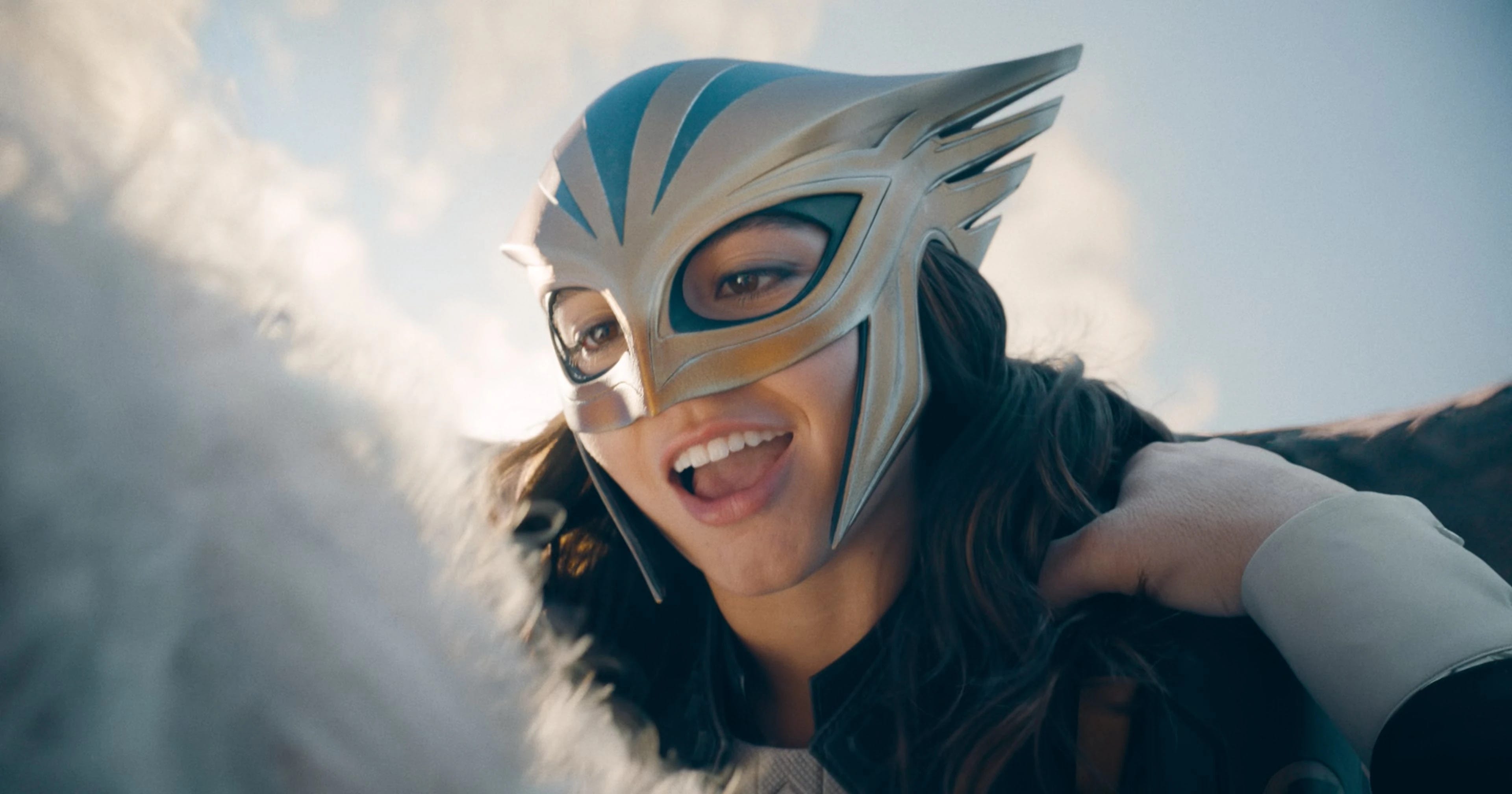
I didn’t expect Hawkgirl to cackle maniacally as she sent a Netanyahu stand-in plummeting to his death from the sky. Don’t get me wrong, when I got it, I was thrilled. It simply wasn’t what I’d expected going in. It didn’t seem like the kind of thing that was allowed to happen in a movie like that.
Speaking of enjoyable, even if unexpected, Zach Cregger’s Weapons was probably as far away from Superman as you can find in the WBD release slate this year. For the follow-up to Barbarian (2022), the studio did its best to keep the film a complete mystery to audiences, attempting to recreate the alchemy that had made Barbarian an instant classic. And, despite the script leaking months before the film’s release, they were mostly successful. Weapons shocked audiences and critics alike. Almost instantly, it began generating awards season buzz of the type usually reserved for much soggier, much more boring films.
And the most memorable thing about that movie? It’s not the plot, or the makeup, or the special effects. It’s not the cop played by Alden Ehrenreich, or the angry dad played by Josh Brolin, or even the evil witch played by the inimitable Amy Madigan. It’s the ending, when the children whom the wicked witch has kidnapped chase her down, pull her to the ground, and fucking murder her.
Whether or not you realized it at the time, 2025 was the year of revolution at the movies. From big to small, prestigious to junky, silly to severe, the films of 2025 were telling us that it’s time to fight back against these truly stupid forces that have enshittified our lives.
The most obvious examples of this are the two front-runners for this year’s Best Picture Award: Sinners by Ryan Coogler and One Battle After Another by Paul Thomas Anderson.
In Coogler’s film, Elijah “Smoke” Moore is the more serious and pragmatic of the two twins. He doesn’t believe in Hoodoo because of the pain he’s seen his family endure. He doesn’t want to take wooden nickels because it will make business more complicated for him and his brother. He’s the kind of man who has made it to where he is today by keeping his head down and worrying about himself. But that changes after he does battle with a gang of Vampires aiming to eat up him and everyone he loves. Once Smoke has saved his little cousin from a life of eternal damnation, he turns his attention to the local Klan, making sure he leaves them in the same state in which he’s already rendered every other bloodless, soulless, parasitic monster he’s encountered in the film.
Of course, One Battle After Another is literally about a former revolutionary, Ghetto Pat, played by up-and-coming star Leonardo DiCaprio. But his character is a burnout whose revolution is over. Instead, it’s his daughter Willa (Chase Infinity) who becomes the revolutionary lead of the movie. While her father fumbles with his phone charger and falls off high rises, Willa confronts her evil biological father, who wants her dead. She comes out the other side stronger and more capable than before. As is too often the case in non-fictional America, the black woman is in Star Wars while the white guy is in The Big Lebowski.

And I could go on. Bugonia tells us to be suspicious of corporate power. Mickey 17 says there’s no such thing as a free lunch. Wake Up Dead Man says that absolute power corrupts absolutely. K-Pop Demon Hunters, Friendship, Avatar: Fire and Ash, Predator: Badlands, Frankenstein, The Day the Earth Blew Up: A Looney Tunes Movie. Across the board, every fun, engaging, exciting, or even halfway decent movie that came out in 2025 seemed to be begging its audience to consider some act of revolution.
Big or small. Outward or internal. Violent or peaceful. Movies this year wanted us to fight the systems that oppress us and hold down those whom we love.
And that’s because movies are an inherently empathetic medium. In a time when the prevailing political pressures of the moment would tell you to only pay attention to yourself and your own needs, movies ask you to look outward. They ask you to consider other people, and wonder what their lives must be like. Wonder what their needs might be. Wonder if their life might be any better. And, by proxy, to wonder the same things about yourself.
As Roger Ebert famously said, “The movies are like a machine that generates empathy. It lets you understand a little bit more about different hopes, aspirations, dreams, and fears. It helps us to identify with the people who are sharing this journey with us.” And in a time of such self-obsession, empathy can feel like a revolution.