

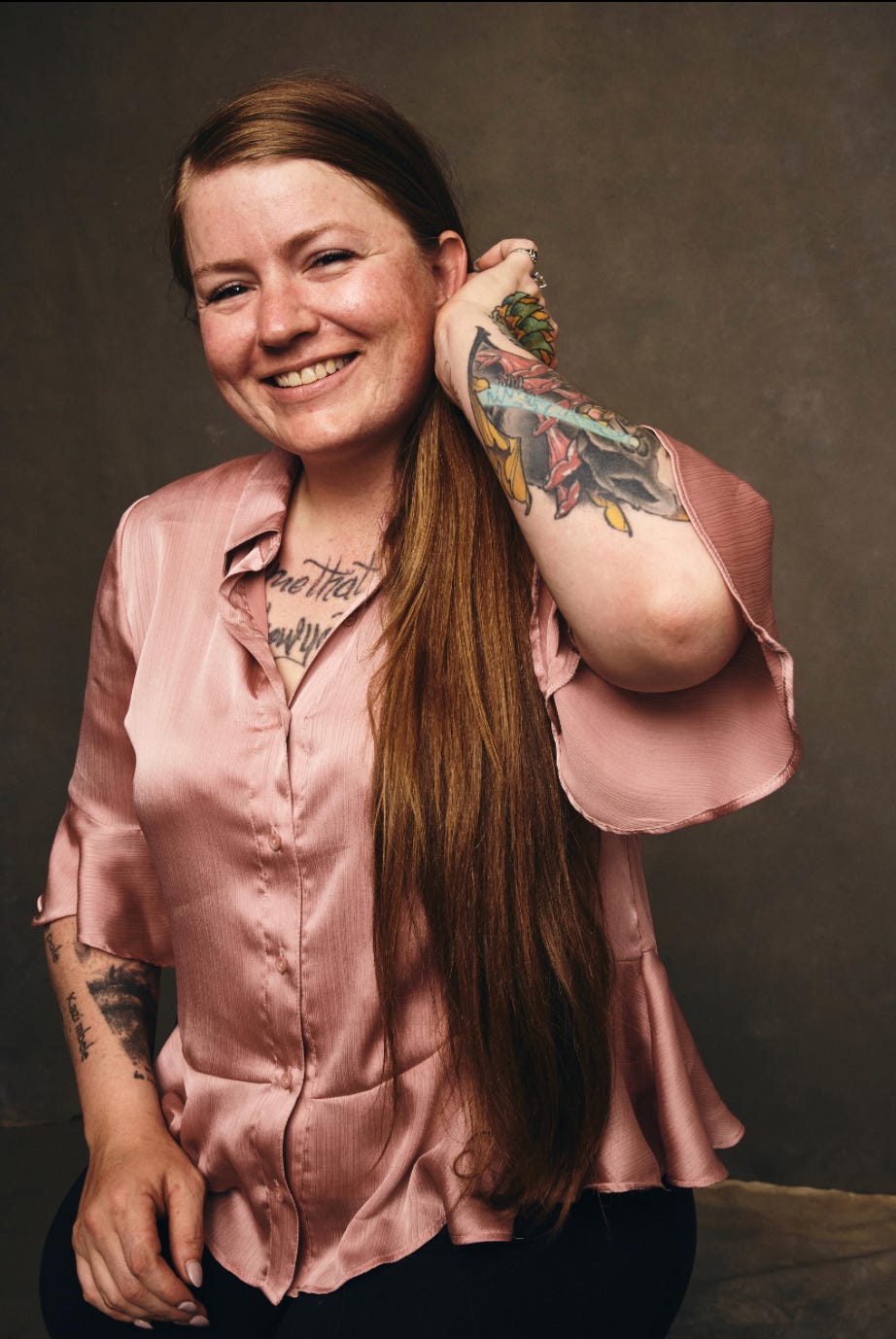
Documentaries can evoke emotions that make you reflect on life in profound ways, and that’s exactly what The Ascent did for me. Directed by Edward Drake (True Detective), Scott Veltri (The Forgiven), and Francis Cronin (Deadlock), the documentary follows the story of Mandy Horvath. Balancing inspiration with investigative reporting, the film explores Mandy’s life after she lost both of her legs at age 21 after being struck by a train.
Coming from a complex home life, Mandy graduated with honors from high school at just sixteen, with dreams of becoming a chef. Having previously struggled with substance abuse, she made friends easily and often helped any stranger in need. All of this came to a head on July 26, 2014. Mandy’s “friend” April, whom she had only known briefly, called to say she wanted to celebrate her birthday with her for the weekend. The three of them—April, Mandy, and Mandy’s boyfriend Dan—headed to a local bar for the night.
Mandy remembers going outside to enjoy the sunset and spend some one-on-one time with Dan. She then went back into the bar and drank the beer she had left behind. The next thing she clearly remembers is petting horses before everything goes dark.
The filmmakers incorporate voiceover from statements given by the train conductor and engineer, confirming that although they pulled the emergency brake, it was too late. By the time they realized the figure on the tracks was a woman and not a mannequin, twenty train cars had already passed over her. They immediately called authorities but also noticed three people ducking from behind some of the train cars, which they found unusual.
Mandy was alive when the ambulance arrived, but she died three separate times and was revived. What followed was a long and harrowing road to recovery, marked by depression, despair, and PTSD. Through it all, Mandy turned to climbing/crawling as a way to transform one of the most uncertain and difficult experiences of her life into something positive.
What’s clear is that Mandy is a survivor, but what she has endured is heartbreaking to watch. In addition to the physical and psychological trauma of being run over by a locomotive, Mandy has a fractured relationship with her parents due to childhood abuse and witnessing similar abuse inflicted on her mother. She carries much of that with her, and while her parents were instrumental in trying to get answers after her accident, there are still layers of their relationship that remain fraught. We see this firsthand as Mandy embarks on the crawl of a lifetime.
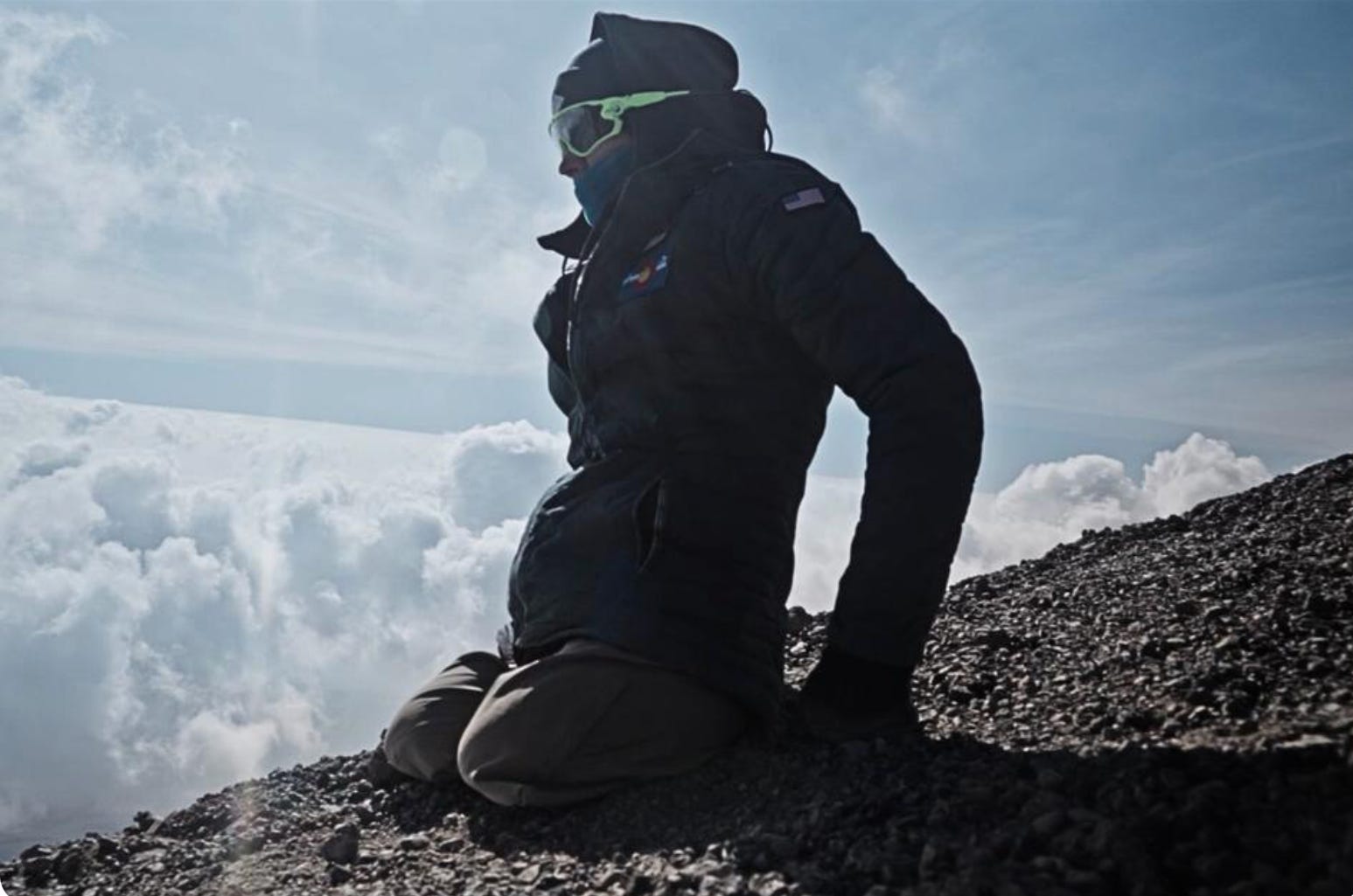
Then there is the other side of the film: Mandy’s preparation to conquer Mount Kilimanjaro for the very first time. As she trains for the crawl, she reflects on the events of July 26th and the lingering uncertainty surrounding that night. She speaks candidly about how difficult it was to fully trust Dan’s account of his involvement and the frustration of never receiving clear answers from April. Witnesses had gone on record stating that Dan confessed during a drunken night at the bar, though he has since passed away. April also spoke with the filmmakers but remained vague, doing little to instill confidence in her innocence.
This lingering ambiguity is where the documentary subtly raises deeper questions. While it stops short of definitively labeling the incident as an accident or a crime, the gaps in the case are impossible to ignore. Mandy never received a sexual assault kit, nor was she tested for Rohypnol, also known as Roofies. Repeated requests from her family, the private investigator, and the filmmakers for access to case files were met with resistance. When access was finally granted, those files had been destroyed. Coupled with claims that Dan’s alleged confession was covered up due to his connections with law enforcement, the film presents a narrative that feels far from resolved but leans heavily into the likelihood that Mandy was likely the victim of several heinous crimes.
Yet, despite these unanswered questions, the film ultimately shifts its focus to more about who Mandy chooses to become in the aftermath. Coming from a place shaped by deep trust issues, she begins to rediscover her voice and strength in ways she never had before. Learning to lean on others again becomes part of her healing.
That journey culminates in her crawl. Mandy partners with an extraordinary team—Carel Verhoef (Expedition Leader), Sally Grierson (physiotherapist and expedition mastermind), and Julius John White, aka “Whitey” (Tanzanian Chairman of the Guides)—to make the impossible possible. Through their care and trust, strangers become family. Even as she faces cramping hands, infection, and frigid temperatures, their expertise and unwavering commitment to her safety carry her forward. Together, they reach the summit, marking not just a physical achievement, but a profound emotional and personal victory.
My hope, after watching this documentary, is that her case is reopened and taken seriously, with a real commitment to uncovering the truth and holding everyone involved accountable. But regardless of what justice may or may not come, one thing remains undeniable: Mandy’s story does not end in tragedy; it rises in triumph. She is worthy of every good thing this life, and beyond, has to offer. Her resilience, transparency, growth, and willingness to confront both her pain and her past set her apart in the most powerful way. There is something deeply moving about watching someone rebuild themselves, not just physically but emotionally and spiritually. Ultimately, this is a story about reclamation. Mandy finds her way back to herself, redefines what strength looks like, and reminds us that even in our darkest moments, healing is possible and community is essential. And one thing is certain: after watching this documentary, we could all learn a thing or two from Mandy. I was inspired by Mandy in a multitude of ways and I know you will be too.
