

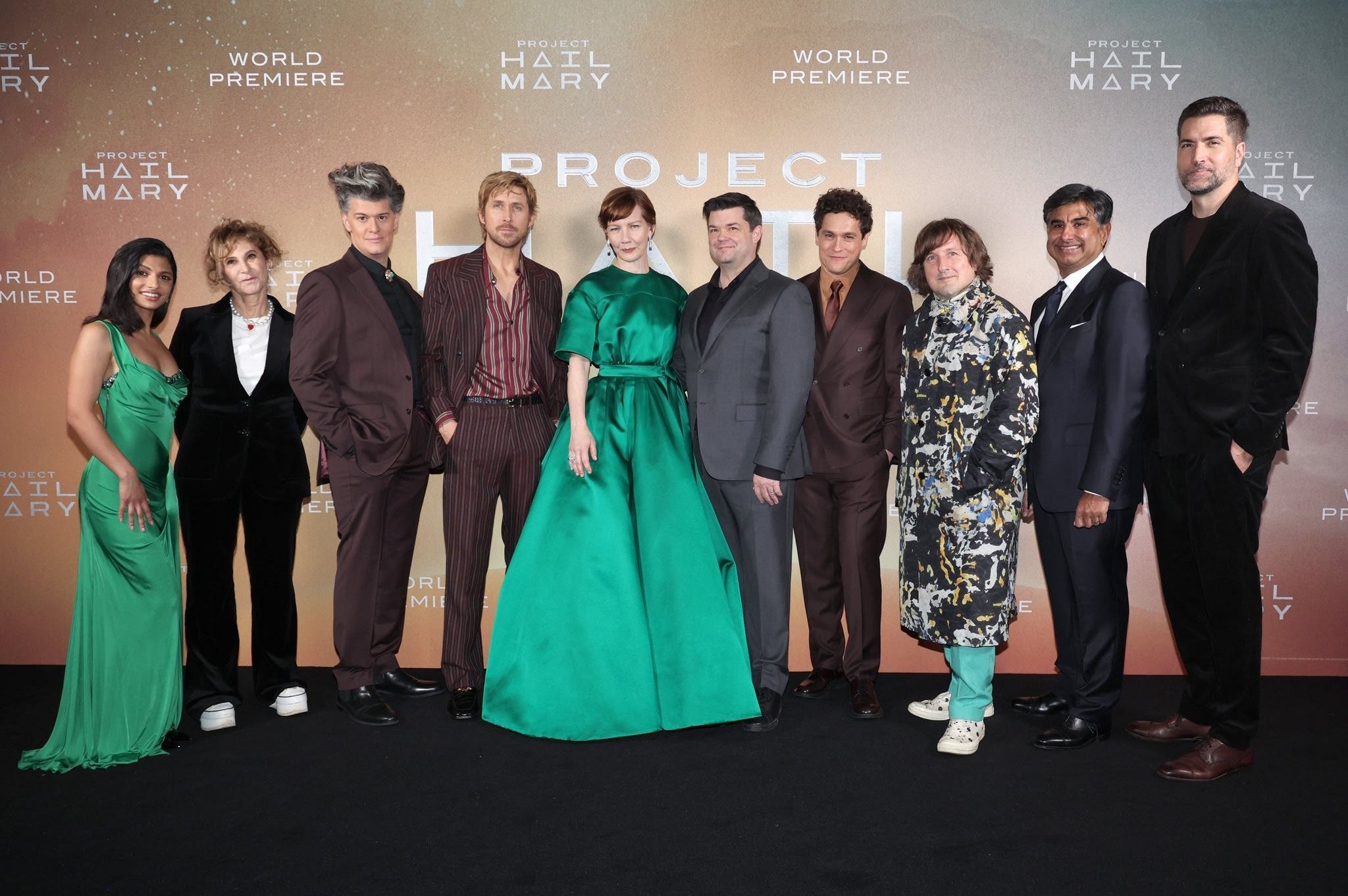
Nerdigo correspondent Kay-B got some exclusive Project Hail Mary scoop, a new sci-fi thriller adapted from the acclaimed novel of the same name. As part of the Critics Choice Association virtual press conference and our SXSW 2026 coverage, participants included Chris Miller and Phil Lord (Directors & Producers), Sandra Hüller (“Eva Stratt”), Ryan Gosling (“Dr. Ryland Grace,” Producer), Drew Goddard (Screenwriter & Executive Producer), Andy Weir (Author & Producer), Amy Pascal (Producer), Rachel O’Connor (Producer), and Aditya Sood (Producer).
Dr. Ryland Grace is a molecular biologist who is comfortable with his life as a sixth-grade science teacher. His whole world is turned upside down when he is reluctantly recruited by Eva Stratt, head of Project Hail Mary, to attempt to save the world as they know it. When he awakens alone on the spaceship, he meets an unlikely ally in alien Rocky (James Ortiz, The Woodsman), and they work together to save the homes they both know and love.
On what captivated him about Andy’s manuscript, Gosling shared: “It just was clear that Andy had captured lightning in a bottle on this and had written something very special. You know, when I got it, it was a time when the movie theaters and film productions were shutting down. And then here was this, like, incredibly moving, optimistic sort of opportunity to look at the future as something not to fear, but just to be figured out. And it felt like a very kind of radical approach, and just felt this is one of those things.”
Gosling continued: “I think we all have films that we remember where we were when we saw them, what they meant about the time that we were in when we saw them. And this had all the potential to be that. I just needed to not mess it up. So, I needed the best team you could possibly get. And that’s why, you know, the dream team is here. And I think that’s what we did.”
On selecting Miller & Lord as the directors to capture the epic scale, scope, space, friendship, and intimacy of the manuscript, Pascal told us: “Well, first, I think Ryland Grace is about as reluctant a hero as there is. And I believe that the challenge and the opportunity were telling a story about journeying into the vast unknown while unraveling someone’s humanity and telling the story through that. The first conversation that I had with Ryan was, ‘Do you think we can get Chris and Phil?’ And the thing about the guys, Chris and Phil, is that they know how to take us onto a thrilling joy ride while making the movie always about the people. And I think that their ability to understand humanity and gravitas is completely singular.”
Pascal added: “And this movie needed to be funny and entertaining, but it also needed to be a movie that tried to make the world a better place. And there was nobody better than these two guys to lead us there. And after 20 years of making movies with Chris and Phil, knowing their boundless curiosity and their endurance and their desire to go everywhere and never stop, these three filmmakers (including Ryan) were the perfect people to make this movie together. And for me, watching this happen was a real career highlight.”
O’Connor chimed in: “Andy’s book is so much about what people can accomplish if they work together. And I think, you know, Chris and Phil as movie makers and as a partnership and a team and as best friends also, they bring what we’re doing in the story to the way they work. And so, I think that also is unique about them and made them right for this.”
On their approach to directing pivotal scenes that showcase the bond between Grace and Rocky, Miller and Lord disclosed: “I think that I don’t know, it’s true that, like, the engine of our work is our conversation. And I think that that is emblematic of—we were at JPL yesterday. Like, the product that they produce is not, like, satellites. It’s conversations amongst creative people and scientists. And that’s what a movie set is, and that’s why we have this amazing producing team. It’s producing the conversations amongst artists and performers and HODs that augment everyone’s creativity. And that’s what you see on screen is the product of all of those, like, wonderful people thinking about something together. And that’s what I love about the movie, is it’s about how two people think about something really hard, about how all these people on Earth, led by Sandra, are, like, thinking together about something, and how powerful that can be.”
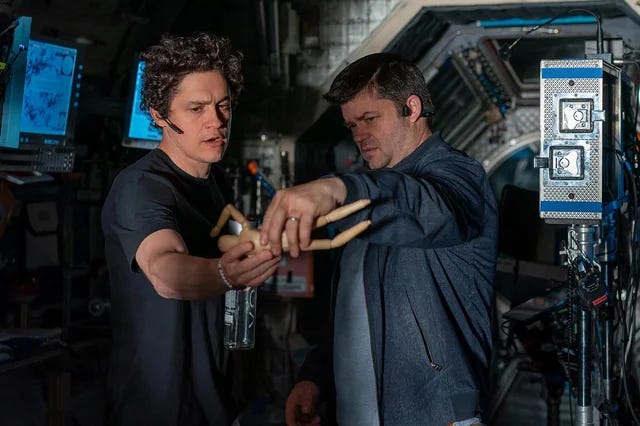
They continued: “I think one of the reasons why Ryan is such a great actor is because every scene he’s in, he’s looking for connection with whoever he is. And all the scenes with Sandra were like you could feel that they were building off each other into something new. And when we had him with James Ortiz, who was the lead puppeteer and the voice of Rocky, on set, they were building off each other. He just kept trying to find connection between this, like, rock creature. And the way that he can find connection with people, whoever they are, whoever’s in the scene, he brings them in and treats them with, like, dignity and love. And it shows up on screen.”
On adapting Andy’s book, Goddard expanded: “I must be honest, when I read it the first time, I was terrified because, in every way, this movie is more ambitious than The Martian. And I think I was scared that I was going to let Andy down. I read it, and I went, oh, I don’t know how human beings are going to be able to do this. And they go, ‘Oh, well, Chris and Phil are going to direct.’ Because I love Chris and Phil so much. I’ve known them for two decades now. I’ve watched sort of this partnership change the face of cinema. I do not say that lightly. Because there’s animation before Chris and Phil, and there’s animation after Chris and Phil. And we’ve seen it in the live action.”
Goddard added: “I was terrified when I first read it because this film is even more ambitious than The Martian. I didn’t know how anyone could pull it off. Then I heard Chris and Phil were directing, and I was in. But I was also scared because this role demands so much from a lead actor—comedy, drama, vulnerability, and carrying so much of the film alone. Then Andy said, ‘It’s Ryan Gosling,’ and that changed everything. There’s not another actor on the planet who could’ve done this. By April, we’ll have been working on this for six years, and it’s been an absolute joy. And honestly, I also thought we’d never find Stratt—until Sandra. The moment I heard her name, I knew we were going to be fine. From a screenwriting point of view, this is the dream.”
On balancing being the no-nonsense boss in control with a hint of softness, Hüller said: “Oh, I think we are never just one thing. We are so many things at the same time, as you can also see in Ryan’s character, and in Rocky. So, I think the more possibilities a character has to show what they are, the better, so I don’t see any contradiction in what she’s doing. But I didn’t know that there was a karaoke scene when I signed up for this. But making this film was my Hail Mary moment. It’s something that I never thought I would do in my life.”
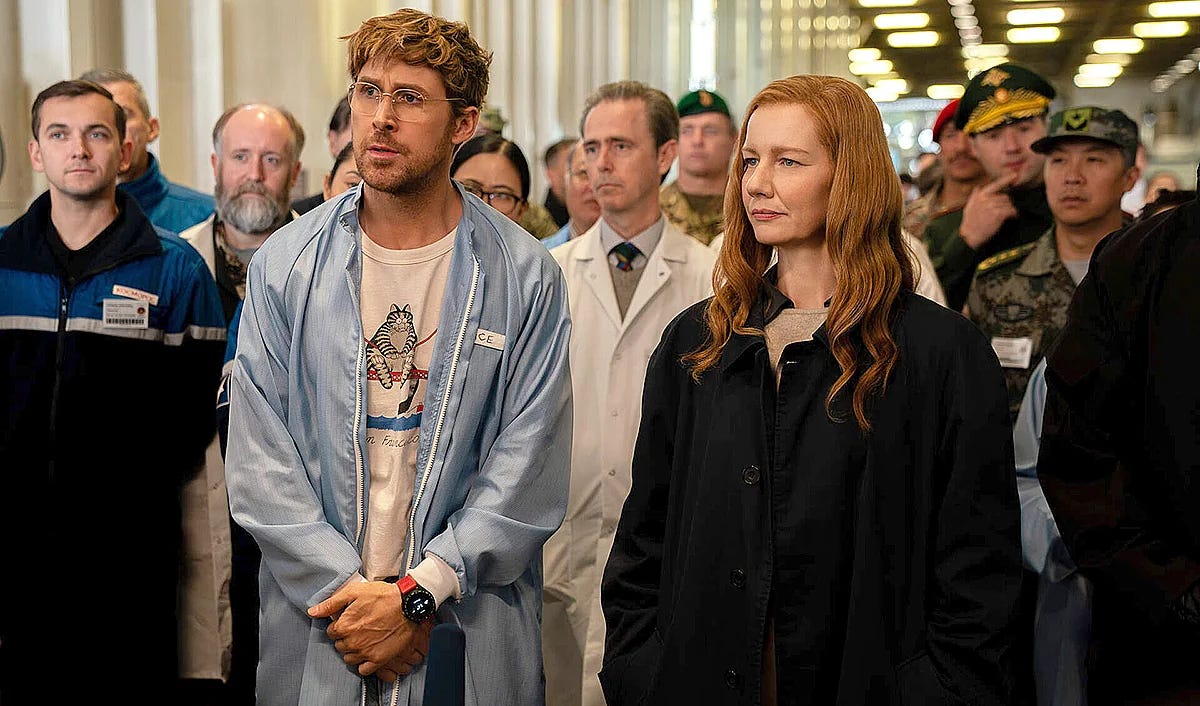
On collaborating with the puppeteer to make Rocky more human, Gosling teased: “He’s very high maintenance. He requires a lot. He has a glam team called the Rocketeers. They dress like ninjas. It’s a whole thing. But, and it was difficult. It certainly would’ve been easier to do this just in visual effects. But the relationship is difficult in the film between these characters. Everything is hard. Being in the same room is hard. Communicating is hard. The levels of meta-ness of which, like, the story and the filming of this, I won’t bore you with, but that is one of them that I think was part of the sort of the magic that’s in the movie, is that we were kind of experiencing what the characters were, in that we were just trying to find a way to connect and to communicate and to make this work.”
Gosling added: “And the beautiful thing is that as Rocky was finding his voice, we had this brilliant puppeteer, James Ortiz, who came into the audition completely differently than anyone else. He pushed the puppet aside and brought Rocky to life with just his hand, and we knew immediately that was him. He was only meant to puppeteer, but he started reading lines in character, which gave me someone to connect with—especially since I was often isolated in a harness. We’d do long takes fully in character, and his connection to Rocky was so deep he would guide the performance, saying what Rocky would or wouldn’t do. Rocky really found his voice through James, and that connection became real. The movie owes a lot to him—he became a key part of its magic.”
On why he wanted to create a hero who is an ordinary person but have them embark on a mission to save humanity, Weir proclaimed: “Well, because I think that, I mean, most people don’t think of themselves as extraordinary people. Most people think of themselves as just, like, I’m a normal person. And when you’re writing a book, you want people to empathize with the main character. And so, I wanted to make a main character that people could really, you know, put themselves in the main character’s shoes and say, like, yeah, I’m a normal person. I would not like finding myself in this situation. I’m not sure what I would do. This would be very awkward and uncomfortable for me. And so, I want all of you to experience that in the cinematic world, to feel awkward, uncomfortable, and scared.”
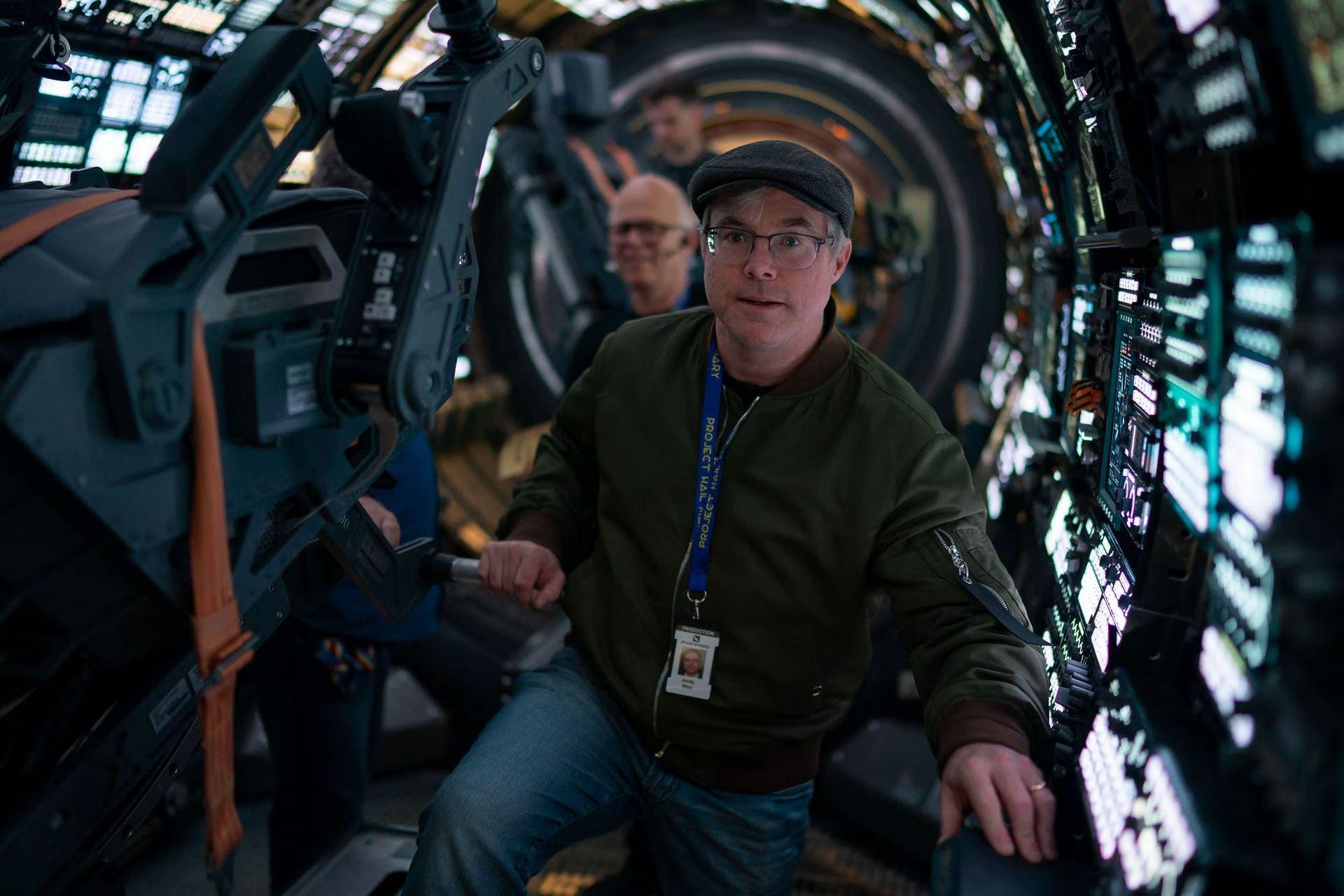
On what makes Weir’s work so well-suited for a film adaptation, Sood informed us: “I mean, he has a brain that I don’t think exists on this planet in any other form, and so it’s such an incredible treat. The only bad thing I have about Andy’s books is when I get his books, I must read them overnight, and I never get to enjoy them and really understand the depth of what he does in the way that I think other people do. But listen, you know, when I read The Martian, it felt like a once-in-a-lifetime book. And then suddenly, you know, six years later, you get this book, which is in every way, shape, and form a more incredible adventure. So, I just feel so lucky.”
On balancing the emotional and bleak moments of the film with puppetry and animation, Miller alluded: “It became a beautiful marriage of puppetry and animation, with the animation team building on the work James and his team created. Editing, led by Joel Negron, was key in navigating the editorial challenges of moving between two time periods while keeping the story flowing. We leaned into the idea that life is funny and sad at the same time—some of the biggest laughs come in the most emotional moments. I was reminded of being in the hospital when my mother died, where we were crying and then suddenly laughing. That mix of emotion is why we go to the movies.”
Lord added: “That’s the thing. Like, you’re crying because you’ve fallen in love with these characters. And you’ve fallen in love with them because you’ve seen them joke together. Those things are not separate. We’re not sitting on stage with, like, a pie chart, going, like, okay, this scene is 40 percent funny and 60 percent heartfelt. Those things, like, to us, you know, the question almost doesn’t make sense because we just try to represent, you know, the clumsiness and warmth of human relationships.”
On what he hopes the younger generation takes away from this film, Gosling revealed: “Well, I think Andy’s voice is just such an important voice right now. It’s such, again, like, a unique and beautiful way to look at the future. And, you know, he’s created this; obviously, it’s, look, you go to another galaxy, you make an alien best friend, you save the world. It’s not bad for a Friday night.”
Gosling continued: “It’s an adventure of a lifetime, but at the same time, it’s not escapist, I don’t think. It’s this reminder of what we’re capable of as human beings. And I just think that for my own family, you know, we struggle to find things that we can go and see as a family. And you kind of look for those core memory moments at the theater that I think we all had as kids. And I really wanted to try and make one of those. And I feel like, you know, just getting to live in the world of this movie with my own family, this idea of turning fear into curiosity that Andy has is such a beautiful message that you can kind of actualize, or at least try to. And I’m just so grateful to him for that, and I hope that that’s the spirit and the hope that young people take from the film.”
On the largest takeaway that humans can get about collaborating for the greater good from this film, Miller shared: “I think that’s the heart of the movie—on Earth and in space, it’s about beings coming together to solve problems. That’s what makes it feel so hopeful and optimistic. Even though it’s centered on an apocalyptic event, it’s not bleak or cold—it’s warm and human. It makes you laugh, cry, and feel everything all at once, which is really what the human condition is.”
Lord concluded: “For 10 years, Chris and I started our careers writing in television, where you’re in a room with some of the smartest, funniest people, creating something together. That’s about as beautiful an experience as you can have, and animation is the ultimate team sport. We were at FotoKem recently watching them print a 15-perf, IMAX 70-millimeter film print, and it really hit me—this isn’t possible without generations of people solving problems. It’s the product of human collaboration over time. That’s what I love about filmmaking—it’s the magic of so many artists working together. And what Andy wrote, and what we set out to make, is something that helps people imagine goodness and reminds them of what we’re capable of.”
Catch Project Hail Mary in theaters now!
Editor’s Note: This coverage reflects a condensed summary of the press conference. Some remarks have been paraphrased or edited for clarity and flow.
