
"In the Blink of an Eye" Is Rooted In The Depths Of The Human Experience
Sundance 2026 Review

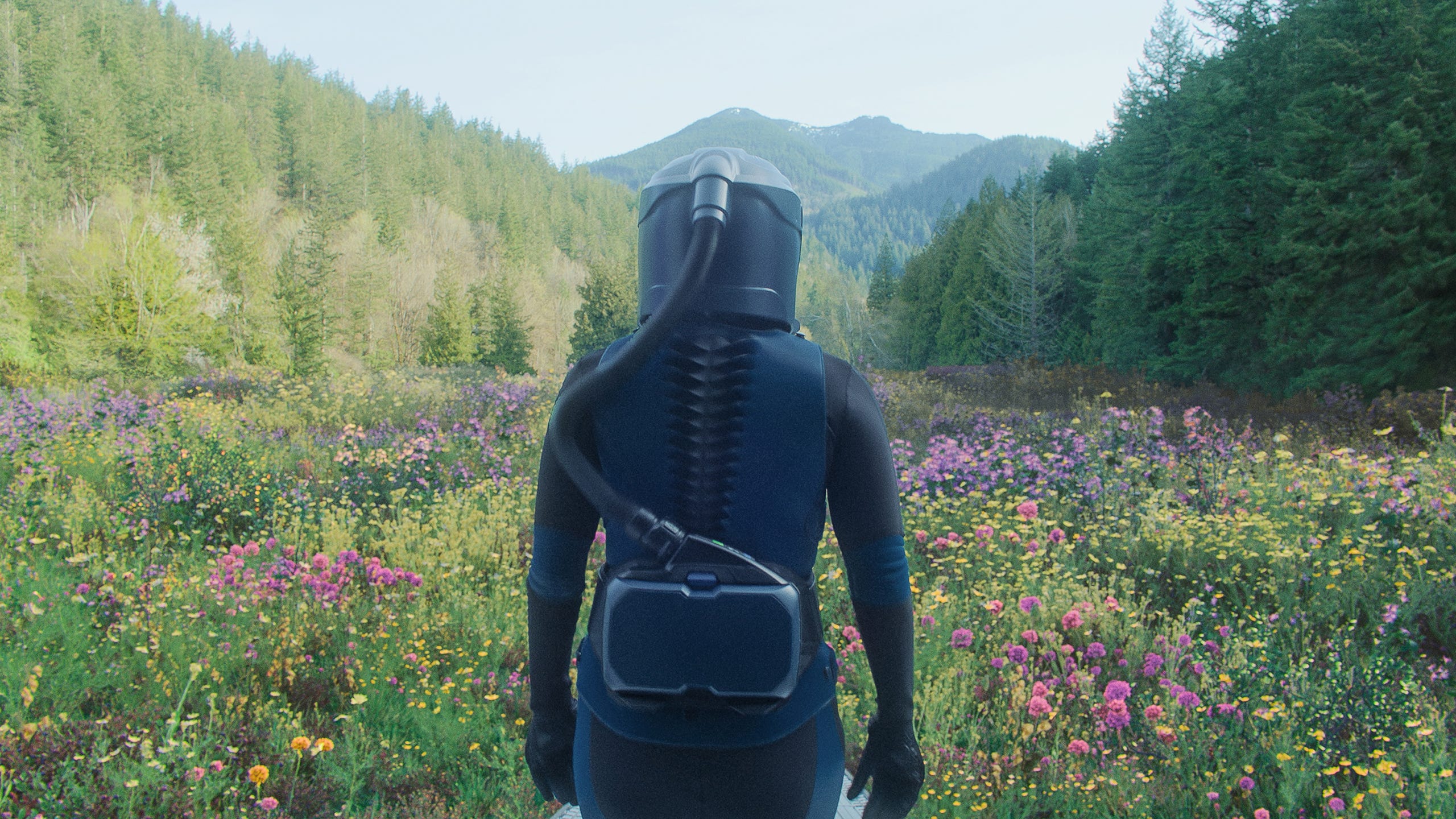
In the Blink of an Eye is a multi-year sci-fi film that covers grief and the human experience across three interconnected timelines. Written by Colby Day (Spaceman) and directed by Andrew Stanton (WALL E), it stars Rashida Jones (“Claire”), Kate McKinnon (“Coakley”), Daveed Diggs (“Greg”), Tanaya Beatty (“Hera” AKA Neanderthal Mother), Jorge Vargas (“Thorn” AKA Neanderthal Father), Skywalker Hughes (“Young Lark” AKA Neanderthal Daughter), and Tatyana Rose Baptiste (“Adult Lark” AKA Neanderthal Daughter).
The film begins with a quote from acclaimed poet and novelist Sylvia Plath that says, “Remember, remember, this is now, and now, and now,” which really is the essence of the film. Beginning in 45,000 BCE (Before Common Era), we meet the Neanderthal family at a very vulnerable part of their story. Hera is pregnant but also has a newborn baby, in addition to Lark. Through devastating circumstances, Hera, Thorn, and Lark experience unimaginable grief. It’s through this display of visceral depression, which they cannot necessarily articulate, that Thorn and Lark must learn to rebuild their lives, get closer, and decide if they’ll let community in. Initial fear and uncertainty about the Homo sapiens they encounter almost cause them to miss out on the very people they end up needing to rebuild their hearts.
In 2025 CE, we meet anthropologist Claire and statistician Greg, who are both at Princeton working on various career goals. Claire is very focused on her genetic research looking back at 45,000 BCE, which, of course, ties her to the Neanderthal family. But before we can get to that connection, via a mysterious artifact, we see Claire and Greg try to go from a one-night stand to a long-term relationship amid Claire
navigating a personal family crisis. This crisis forces them apart in distance, causing Claire to swing back and forth on whether they are meant to be. Greg, however, sees a future with Claire, despite their unconventional, challenging, and oftentimes frustrating long-distance relationship. So, when things shift and they continue to grow together, their family, particularly their young son who has the curiosity and tenacity of his mother, becomes the key to unlocking science in a way that has never been explored before.
Finally, in 2417 CE, we meet Coakley, a longevity enhanced pilot on Elixir, and her AI co-pilot, Rosco. They are on a 200-year journey through space to get to another planet, Kepler-16b. They’ve created a greenhouse onboard that provides them with oxygen and nutrients to survive the journey and prepare to create a new civilization when landing on the planet. When a mysterious contaminating virus, immune to the antiviral experimental treatments they prescribe, threatens to displace the entire mission—killing both of them in the process—Rosco determines that sacrificing the AI self is the only way to sustain plant life and help Coakley reach the end. This is key because onboard the spaceship are embryos, and again, Coakley is charged with getting this new life to Kepler-16b and seeing it thrive.
As we move through the ages woven throughout various points in the story, we see why and how Claire’s research, rooted in 45,000 BCE and her direct linkage to the skeletons of the Neanderthal family we meet, plus how her and Greg’s choice to create a family, impacts science and life for Coakley into 2417 and beyond.
The layers of this film are held together by the throughline of motherhood and grief. It forces audiences to examine their own mortality and determine what sacrifices and risks in life are worth it. It shows that in every lifetime and era, no one is immune to pain, but community and joy tend to be choices we can all make when life becomes overwhelming. This film notes that it’s not if life will be filled with hardships— it guarantees it will—but asks the audience to consider how they will deal with it when it comes.
The film is not without critique, of course. There is a significant amount of time spent with Claire and Greg virtually interacting, but, in turn, not enough time revealing more about Coakley. So, when one of her children asks her why she isn’t aging anymore, the response leaves a bit more to be desired. I think, had we addressed that, the ending would’ve garnered fewer questions because the link from 2025 to 2417 would’ve been clearer. I also would’ve loved to spend more time on a theme that is briefly touched on: if we had the ability to live forever, would we want to? Greg actively states that he is happy with his life ending, and Claire echoes that sentiment, but it is as if Coakley may be living it—and what are her thoughts? It’s not necessarily confirmed that she is, which, again, additional clarity would’ve brought it home with audiences a bit more.
While In the Blink of an Eye may not be for everyone, it piqued my interest, even with the questions I had after it ended. The reality is that, in the human experience, life goes so fast—in the blink of an eye. All human beings are racing against time. So, while the question poses the idea of using science to slow or even eliminate the race against time, it doesn’t necessarily answer if all the characters have the free will to determine that for themselves or if they want to experience life as we currently know it. The connectivity of the human experience is one of the greatest gifts every single human has, and maybe the message is that no matter where technology takes us, we should remember to make the most out of every moment and know that there is no substitute for the experience of living in love and community. It can make our experiences richer in every way.
 | A guest post by
|